About the Project
Abstract
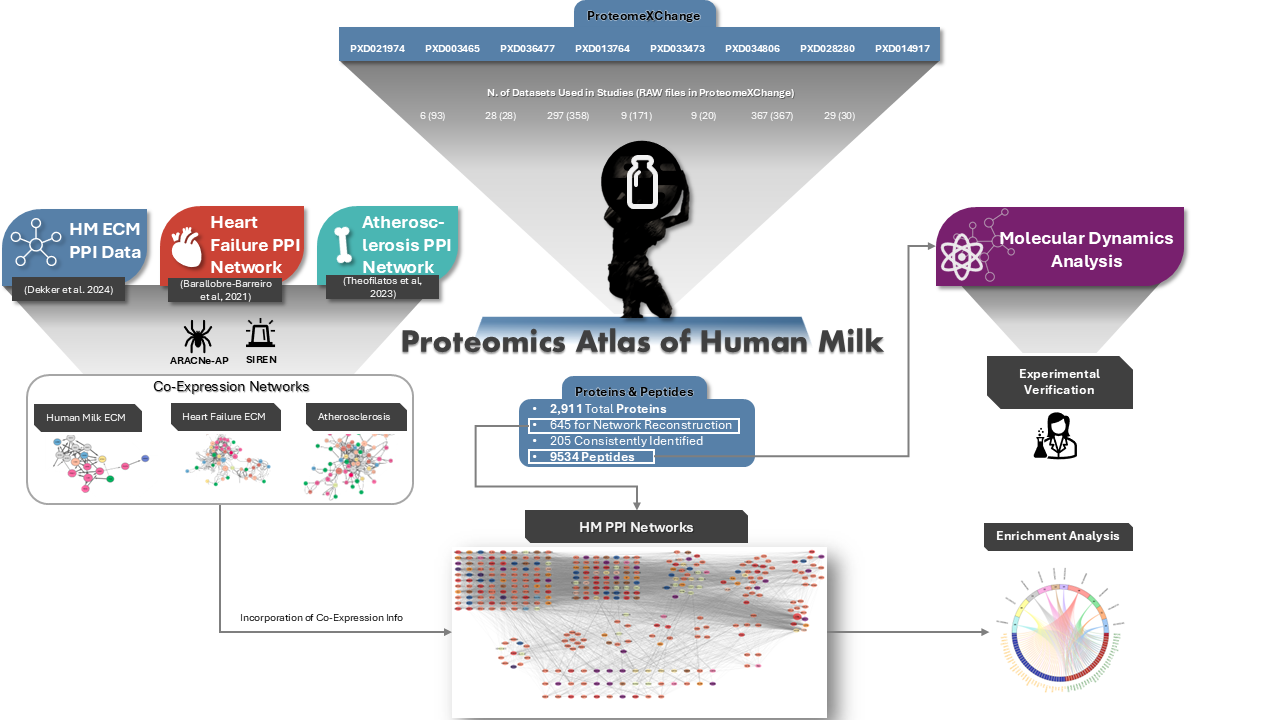
Human milk is a complex biofluid whose molecular composition underpins neonatal nutrition, immune protection, and developmental regulation. In this study, we performed a large-scale meta-analysis of mass spectrometry–based proteomics datasets to construct a unified, queryable human milk proteome atlas. By harmonizing 753 raw samples from 8 mined datasets through standardized preprocessing and normalization, we identified 2,911 proteins in total and defined a “core” proteome of 645 consistently quantified proteins by applying consistency filterings. Machine-learning-based prediction of the binary protein-protein interactions (PPIs) from these 645 proteins led to a set of 12,250 positive interactions. Reconstruction and analysis of the PPI network from these 12,550 interactions revealed distinct functional clusters related to immune defense, vesicle-mediated secretion, and proteostatic control. In addition, for the first time, protein regulatory networks of human milk have been reconstructed, identifying immunoglobulin proteins, including IGHA1, IGKC, and IGHG1, as highly central nodes in human milk and cardiovascular disease-related regulatory networks, linking milk-specific processes with pathways implicated in cardiovascular pathology. These results highlight the systemic relevance of milk-borne proteins and their potential role in maternal–infant molecular communication in both health and disease. The integrative framework developed here provides a robust foundation for large-scale comparative proteomics and network-based reconstruction of human milk protein interactions and sets the stage for future studies aimed at elucidating the complex regulatory architecture and therapeutic potential of human milk.
Workflow
Below you can see the workflow overview: